
In Depth Graphic Design & Branding
What Stays Editable in an AI-Assisted Brand System?
A fictional design studio builds a festival identity around generative marks, then tests which decisions belong in the final design files.
Editorial sample
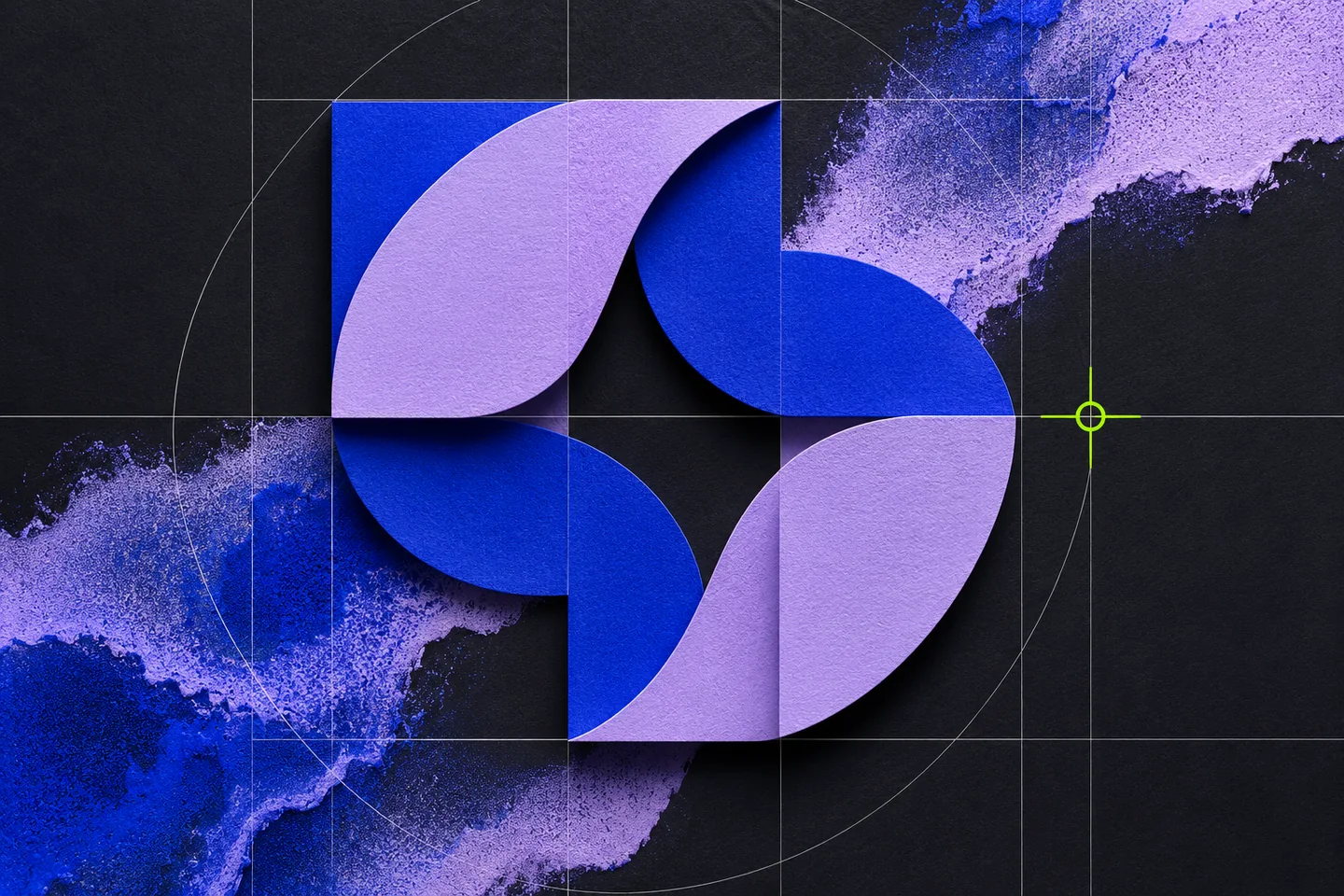
Illustrative case study. The festival, studio and design exercise are fictional.
The brief for Foldfield, an imaginary design festival, is to make an identity that feels different on every poster and familiar across all of them. The studio generates variations of ink folding around paper seams: soft interruptions, tight creases and uneven edges. One frame has the right energy for a launch poster. The test arrives when a venue changes and the poster has to become a narrow street banner.
Start with the edits the team expects to make
The studio lists its most likely changes: a longer speaker name, a new sponsor lockup, a language version with different line breaks and a venue with its own minimum type sizes. Every element involved in those changes stays native to the design file. The team sets the wordmark and headline in editable type, draws the organizing shapes as vectors and defines a grid that can absorb new text without shifting every element by hand.
The generated ink becomes a separate image layer with a mask. It can move, change scale or be swapped for a quieter variation. The same crop may work on a poster and fail on a phone. With the image separated from the text, the designer can pull back the texture on the smallest format while preserving the visual position of the headline.
Curate the variations as a set
The team builds a contact sheet from the generated material. It reviews where the creases collect, how dense the grain becomes and whether each image still reads when cropped. Three marks carry most of the system: a dense field for event announcements, a fine seam for programme pages and a high-contrast fragment for motion. The group can now choose a texture by what the composition needs.
Each approved image travels with a short note about its use, a neutral master and exports for print and screen. The prompt and selected source references stay in the project notes. Those notes help the next designer understand the direction when a genuinely new variation is needed. Routine layout changes can happen directly in the production files.
Rehearse the handoff with an awkward format
For the last exercise, a designer who did not make the first poster assembles a narrow banner. She gets the files, the palette and the usage notes. She moves the crease away from a longer title, switches to the fine texture and exports a legible banner. During the exercise she discovers that one decorative shape clashes with the smallest sponsor lockup. The team documents the exception before anyone needs to fix it under deadline.
A useful handoff check is to change a real line of copy, replace one generated layer and export an unfamiliar size. The edits reveal which decisions the system actually preserves. In Foldfield’s case, those decisions are hierarchy, spacing and the amount of visual pressure the texture can put on the page.