
From Generated Surface to Usable 3D Material
A fictional product-visualization test shows how to turn generated references into a material that holds up under rotation, scale changes and new lighting.
Editorial sample
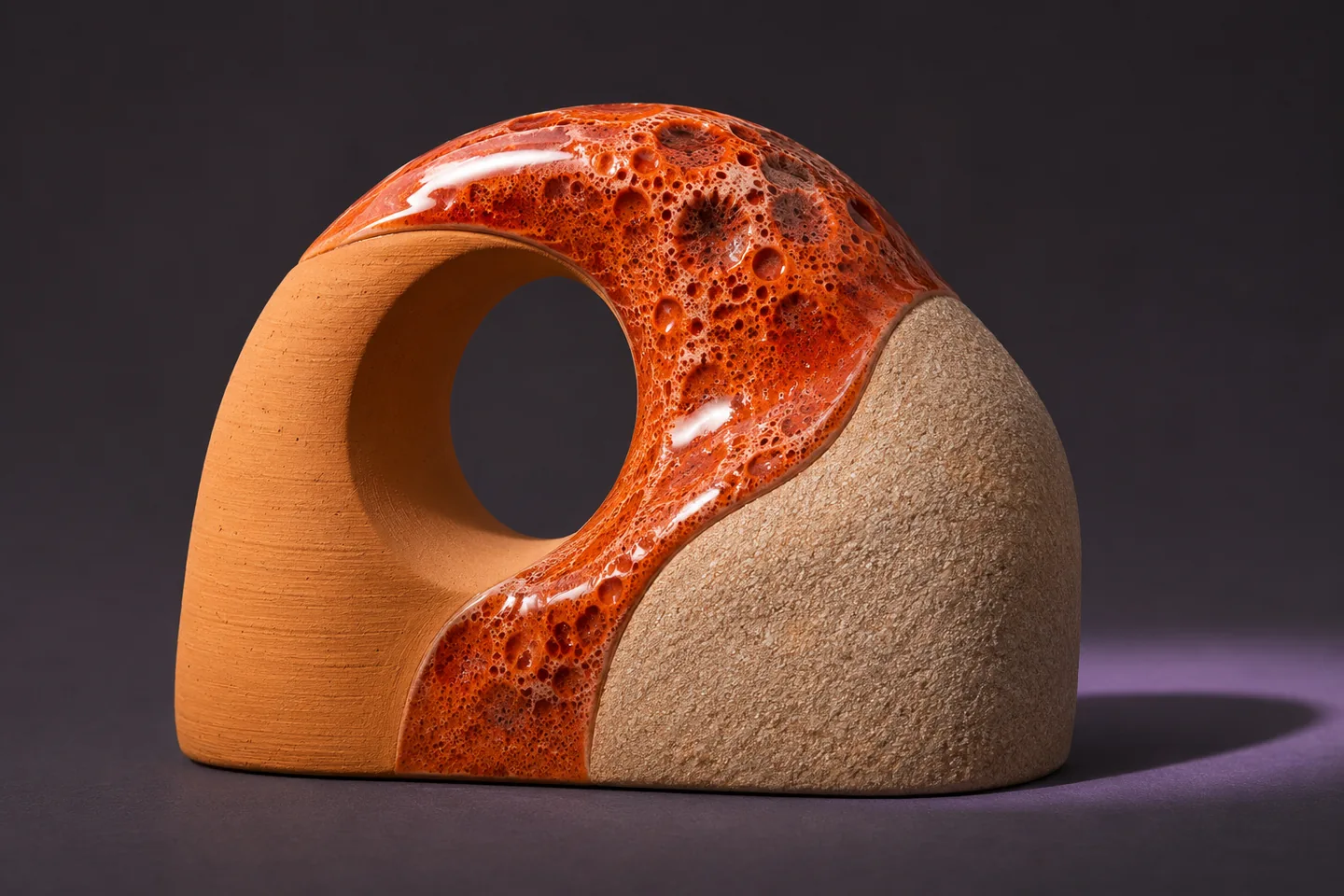
Illustrative case study. The scene and material brief are fictional.
Imagine a small product-visualization team designing a ceramic speaker for a portfolio scene. A generated reference nails the brief: a dry terracotta surface, tiny mineral flecks and a glazed lip that catches a soft highlight. The team needs three camera angles and a ten-second turntable. As the object rotates, the convincing highlights in the reference become a problem if they travel with the texture.
Separate the appearance from the lighting
The reference answers questions about the look: are the flecks tinted or neutral, is the surface almost dry or visibly glazed, and where does the transition happen? The material answers different questions. Its base color describes the tint and pattern. Its roughness controls how broad or sharp a reflection appears. Fine surface relief can be suggested by a normal or bump map at a scale appropriate to the object.
The team makes a small reusable color pattern from the generated texture, removing obvious highlights and checking seams before tiling it. It gives the matte body and glazed lip independently adjustable roughness values. Flecks in the color get their own level of contrast instead of forcing the same brightness to govern roughness and relief. That leaves the designer free to tune each visual cue separately.
Give the texture a measurable scale
A small patch can appear convincing until it is wrapped around a product. The studio compares the texture on a tile, a rounded test form and the actual speaker model. On the speaker, a fleck large enough to read as aggregate on a countertop can look like a defect. The team picks a reference size, records the texture scale and checks how the pattern travels around grooves and seams.
Testing with one close crop and one catalogue-distance view exposes different problems. A harsh height effect is obvious up close. At a distance, repeated clusters can form a second pattern that is more prominent than the material itself. The pair of views gives the team a shared basis for adjusting blending, variation and tiling before rendering the full shot.
Judge the finish under a moving light
The final test uses three lighting setups: a large soft source, a grazing strip and a neutral environment. In the grazing setup, the glazed lip should catch a narrower reflection than the body. As the speaker turns, reflections should shift naturally. A bright patch that remains in one place on the model points back to the color map. A surface that changes from ceramic to something like glitter calls for a quieter relief or roughness pattern.
The handoff is a named material with its maps, scale, color reference and approved test render. If the studio needs a cooler colorway next month, it can make that change while keeping the glaze and texture behavior consistent. The generated reference still earns its place by giving the artist a precise look to translate.